12 board games for 7 players
For board games for 7 players, start with Deception: Murder in Hong Kong. The 12 titles below are drawn from Tabletop Lens's 175-game catalogue and ranked for a table of exactly 7, scoring how well each fits the occasion, whether the player count matches the game's sweet spot, and how close the rules load is to what you want. Player count, play time, weight and the reason for each pick are listed with every entry.
The list
Buy links in the list are Amazon Associates links. As an Amazon Associate I earn from qualifying purchases.
 01
01Deception: Murder in Hong Kong
4–12 players (best 7) · 20–30 min · weight 2/5
A masterpiece asymmetric deduction mafia-style board game in which players must identify the murderer hidden among the investigators, based on the subtle clues provided by a silent forensic scientist. Players are split into roles such as the lead investigator (forensic scientist), investigators, the murderer, and an accomplice; the forensic scientist, unable to speak, must place markers on six crime scene tiles to give only indirect hints (cause of death, location, etc.), and the investigators must correctly pinpoint the two clues (means and evidence cards) the hidden murderer secretly chose in advance — a highly cerebral deduction game.
Why it fits · ♡5 for this table — Catching the Murderer and Shameless Acting · Best at 7 players
Skip if · That moment when the forensic scientist gives you, the murderer, perfectly clear hints, yet your clueless fellow investigators twist the forensic scientist's true intent, stubbornly accuse an innocent bystander to the very end, and drag the game to defeat. Or when you, the murderer, keep a perfect poker face and airtight logic to dodge the investigation right up to the brink of victory, only for one investigator to, with zero rational basis, pick a card just because it 'feels like them' — and it happens to exactly match your murder means and evidence, blowing your cover for nothing.
 02
02Skull King
2–8 players (best 6) · 30 min · weight 2/5
A high-level psychological card game built on the classic 'trick-taking' system, where each round you predict (bid) exactly how many tricks you'll win and must nail that number precisely. You have to throw out powerful special cards — Skull King, Pirates, Mermaids, Kraken — that counter each other like rock-paper-scissors, at just the right moment to flip the table. It's a tense mind-games masterpiece where you can ruthlessly wreck someone else's bid to hand them a penalty, or declare 'zero' (betting on zero tricks) for a high-risk, high-reward jackpot.
Why it fits · ♡5 for this table — Dopamine explosion · Works at 7 (best at 6)
Skip if · When the table goes silent because everyone's deeply absorbed in the card counting and bid calculations unique to the trick-taking genre, or when a player suffers a serious mental breakdown and stress from having their carefully laid bid plan wrecked in an instant by someone else's interference (like being forced into an unwanted trick win).
 03
03Jalape-NO!
2–7 players (best 4) · 25–30 min · weight 2/5
A cheerful reskin of the famous German card game 'Neunundneunzig' (Ninety-Nine) with a jalapeño theme. Players lay down one card at a time onto a shared running total, and the moment that total crosses the hard ceiling of 99, whoever played that card is out — a classic hot-potato, read-the-room card game. You have to work in special cards (locking the count at 99, reversing turn order, subtracting 10, etc.) to survive, and the tense card-hoarding and psych-outs to shove opponents to the edge of 99 make this a well-made party game full of laughs.
Why it fits · ♡5 for this table — Dopamine explosion · Works at 7 (best at 4)
Skip if · With only 2-3 players, the pace of the running total becomes too predictable and the fun of tangled special cards drops off. Skip it if a player finds simple mental math or quick on-the-spot calculation tiring, or if a peace-loving strategy fan wants to win purely on skill and clean buildup with no sabotage or targeting.
 04
04One Night Ultimate Werewolf
3–10 players (best 5) · 10–15 min · weight 2/5
A high-speed asymmetric mafia game where you must find the real werewolf using just one night and one day of discussion. During the night, players secretly perform their unique roles (Seer, Robber, Troublemaker, etc.) following a dedicated app's narration — but since cards can swap places during the night, players must logically deduce "what is my real identity right now" during the day's discussion and deceive others to get them voted out — a well-made social deduction board game.
Why it fits · ♡5 for this table — Dopamine explosion · Works at 7 (best at 5)
Skip if · When there's an introverted player who can't handle and easily gets upset by picking apart others' words, shouting accusations, or the spicy emotional arguments and lying discussions of being falsely accused as the werewolf, saying "I'm really a villager, why is everyone suspecting only me." Or when a rule violation (misplay) happens — someone misreads their own night action or accidentally reveals it, saying "wait, I touched this during the card-swap phase earlier?" — because they misunderstood the card-swapping mechanic, instantly collapsing the elaborate logical deduction board built during the day's discussion. Also when even one shy or less talkative person can't offer any alibi or argument and sits silently sidelined through the tense discussion time.
- 05
Wavelength
2–12 players (best 6) · 30–45 min · weight 2/5
An innovative empathy-building communication party game where teams use an analog dial device to tune into each other's perception. Each round, the clue-giver draws a keyword card representing two opposite extremes — like 'hot thing vs. cold thing' — checks the hidden target's position, and gives a single word meant to evoke that spot. For example, if the target leans toward 'hot,' they might give the clue 'coffee,' and the teammates discuss where on the wavelength between the two extremes that word 'coffee' should land, turning the dial to aim for a high score — a superbly crafted communication game.
Why it fits · ♡5 for this table — Dopamine Explosion · Works at 7 (best at 6)
Skip if · When there are 3 or fewer players, the fun of group discussion and the noisy back-and-forth of aligning opinions loses half its charm; avoid it when a group is made up entirely of hyper-competitive strategy purists who only want to win through airtight rules and pure calculation.
 06
06Codenames
2–8 players (best 6) · 15–30 min · weight 2/5
A classic team-based communication and word-deduction party game where two teams' spymasters look at a 5x5 grid of 25 word cards and call out a 'one-word hint' plus a 'number' that ties together their own team's words, and their teammates must associate the semantic links between words to find the correct answers while avoiding the opposing team's words and the deadly assassin word.
Why it fits · ♡5 for this table — Dopamine explosion · Works at 7 (best at 6)
Skip if · Skip it with an impatient player who can't stand the flow being dragged down and loosened by the spymaster's excessive deep-thinking (analysis paralysis) while dreaming up a hint. Also skip it with someone who feels intense communication frustration at the sudden-death rule of instantly losing when the 'assassin word' is touched, or at being eliminated because teammates couldn't parse a brilliant hint and picked the wrong word.
 07
07Werewords
4–10 players (best 6) · 10 min · weight 2/5
Villagers work together to guess a secret word known only to the 'Spirit,' using a real-time deduction Mafia-style format with yes/no questions over four minutes. But a 'Werewolf' is hiding among the citizens, doing everything possible to throw the guessing off track, and on the citizen team there's a 'Seer' who knows the answer but loses if the Werewolf catches on to their identity and snipes them. In the chaos of overlapping questions, you have to pick up on subtle nuances to both guess the secret word and uncover everyone's true identity — a superbly crafted psychological party game.
Why it fits · ♡5 for this table — Dopamine Explosion · Works at 7 (best at 6)
Skip if · When there are 3 or fewer players, the tense psychological tug-of-war and web of suspicion between roles goes completely slack; also avoid it with quiet players who get real stress or anxiety from twenty-questions-style guessing or improvising talk/lies in front of a group.
 08
08Hard to Get
2–12 players (best 3) · 15–20 min · weight 1/5
A classic communication and cooperative deduction card game where one player becomes the 'Witness' who knows the truth, while the rest become 'Detectives' who must work together to find the one correct word the Witness has secretly chosen among 16 words arranged in a 4x4 grid. Instead of speech or gestures, the Witness can only give hints by picking one side of a randomly-drawn dilemma card each round (e.g., 'Starcraft' vs. 'Super Mario' — which is the answer word closer to?), and the Detectives use these vague, quirky clues to painstakingly filter out wrong answers — the brain-burn is real.
Why it fits · ♡5 for this table — Sure bet · Works at 7 (best at 3)
Skip if · Skip it if there are only 2 players (unplayable) or 3 or fewer (the lively debate tension among detectives interpreting hints drops off sharply); with players who feel intense frustration or unfairness at the abstract cooperative system of having to infer someone else's subjective values and offbeat analogies (e.g., parkour is muscle, so it's meat juice) without any clear logic or numerical basis.
 09
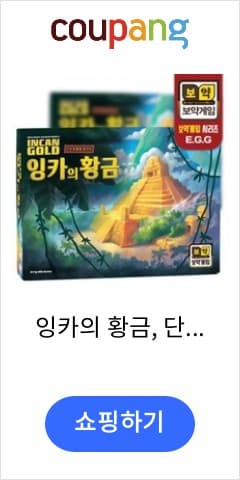
09Incan Gold
3–8 players (best 5) · 20–30 min · weight 1/5
A classic, well-made push-your-luck/nerve party game where you explore a cave that gets deeper each round, deciding every turn — simultaneously with everyone else — whether to go deeper for more treasure ('Go') or safely retreat to camp with what you've got ('Stop'). The deeper you go, the more treasure piles up, but the moment the same hazard card (spider, snake, mummy, etc.) shows up twice, everyone still inside loses all the treasure they've collected and is forced to flee — a thrilling risk-management system at its core.
Why it fits · ♡5 for this table — Dopamine explosion · Works at 7 (best at 5)
Skip if · When there are 3 or fewer players, badly diluting the tense back-and-forth of timing your escape and the fun of splitting gems by however many remain; or when someone gets deeply stressed by a system where their assets can vanish instantly based purely on the luck of a dice roll or card draw rather than calculated risk.
 10
10Top Ten
4–9 players (best 4) · 20–30 min · weight 1/5
A cooperative party game where everyone teams up to hit a target score. One player acts as the 'PD' (director) and throws out an absurd, hilarious scenario; the rest secretly draw a number from 1 to 10 and must act it out — through words or gestures — at that exact intensity. Numbers near 1 call for the 'weakest or most negative' take, numbers near 10 the 'most extreme or over-the-top' one, and the PD has to watch everyone's tearful performances and line them up in numerical order. Every time the order comes out wrong, the group's life total (unicorn tiles) drops. Between the outrageous ad-libs and full-send acting, this is a top-tier comedy party game that keeps the laughs coming all game long.
Why it fits · ♡5 for this table — Dopamine explosion · Works at 7 (best at 4)
Skip if · With 3 or fewer players, the back-and-forth of the role-play and the chaotic energy of a big group guessing numbers drops off fast. Skip it if a quieter player finds performing out loud in front of others genuinely stressful and draining, or if the group wants a heavy strategy game decided by pure skill and probability.
 11
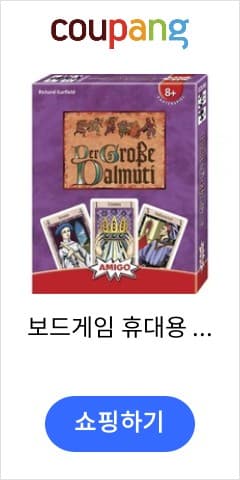
11The Great Dalmuti
2–8 players (best 4) · 15–30 min · weight 1/5
A classic climbing card game set in a rigid class society. Players are ranked from Dalmuti (king) down to peasant (slave); you must play a set of cards matching the previous count but of lower (stronger) rank to empty your hand first, and your final ranking determines next round's status, seating, and tax-tribute rules — a raucous, delightfully unfair class-based party game.
Why it fits · ♡5 for this table — Dopamine explosion · Works at 7 (best at 4)
Skip if · When there's even one introverted player who, on a personal, emotional level, can't stomach the barbed jabs, flattery, and condescension (Take-Your-Kid-to-Work-Day-style joking) tied to the class hierarchy and card-tribute (tax) rules, or the loud political scheming atmosphere itself. Or when even a single player, stuck as a peasant (slave) round after round due to consecutive terrible hands, ends up just shuffling cards and resetting seats while feeling deep alienation and deprivation, saying "I feel like I'm just watching, not playing" — souring the mood.
 12
12The Resistance: Avalon
5–10 players (best 5) · 30–45 min · weight 1/5
An immortal masterpiece social-deduction (mafia-style) board game where players split into King Arthur's loyalists and Mordred's minions for a showdown of good versus evil. Players hide their identity while forming expedition parties and holding up/down votes on whether the expedition succeeds, all while trying to uncover each other's true allegiance — a party deduction game especially known for the tangled wordplay and high-level political psychology between the good side's key informant 'Merlin,' his protector 'Percival,' and the leaders of the evil side.
Why it fits · ♡5 for this table — Dopamine explosion and peak variety-show fun · Works at 7 (best at 5)
Skip if · When an introverted beginner who has zero interest in deduction or acting, and who's extremely fearful or uncomfortable with the very act of lying, is forced to lead an expedition or face a barrage of questions and their voice starts to shake and crack. Or when the table is flooded with baseless accusations relying only on someone's face, personal familiarity, or 'you sound suspicious because you're loud' style stubborn agitation instead of logical grounds, leaving a gamer who prefers quiet, sharp deduction feeling alienated and deeply intellectually fatigued.
| Game | Players | Time | Weight |
|---|---|---|---|
| Deception: Murder in Hong Kong | 4–12 players (best 7) | 20–30 min | weight 2/5 |
| Skull King | 2–8 players (best 6) | 30 min | weight 2/5 |
| Jalape-NO! | 2–7 players (best 4) | 25–30 min | weight 2/5 |
| One Night Ultimate Werewolf | 3–10 players (best 5) | 10–15 min | weight 2/5 |
| Wavelength | 2–12 players (best 6) | 30–45 min | weight 2/5 |
| Codenames | 2–8 players (best 6) | 15–30 min | weight 2/5 |
| Werewords | 4–10 players (best 6) | 10 min | weight 2/5 |
| Hard to Get | 2–12 players (best 3) | 15–20 min | weight 1/5 |
| Incan Gold | 3–8 players (best 5) | 20–30 min | weight 1/5 |
| Top Ten | 4–9 players (best 4) | 20–30 min | weight 1/5 |
| The Great Dalmuti | 2–8 players (best 4) | 15–30 min | weight 1/5 |
| The Resistance: Avalon | 5–10 players (best 5) | 30–45 min | weight 1/5 |
Frequently asked questions
What is the best board game for 7 players?
Deception: Murder in Hong Kong. It scored highest for a table of exactly 7.
How is this list ranked?
All 175 games in the catalogue are scored on fit for the occasion (up to 70 points), whether your player count matches the game's best count (up to 15), and how close the rules load is to the target weight (up to 15). Nobody pays to move up this list.
Can I narrow it down further?
Yes. Pick your occasion, player count, weight and available time and you get a ranked list for that exact combination, plus a course that runs from warm-up to closer.
Other conditions
Want to narrow it down
Answer four questions — occasion, players, weight, time — and get a list for that exact combination.
Get a recommendation