The Great Dalmuti
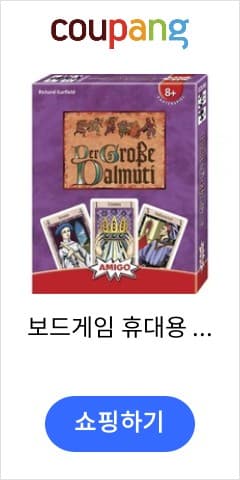
As an Amazon Associate I earn from qualifying purchases.
A classic climbing card game set in a rigid class society. Players are ranked from Dalmuti (king) down to peasant (slave); you must play a set of cards matching the previous count but of lower (stronger) rank to empty your hand first, and your final ranking determines next round's status, seating, and tax-tribute rules — a raucous, delightfully unfair class-based party game.
As an Amazon Associate I earn from qualifying purchases.
※When there's even one introverted player who, on a personal, emotional level, can't stomach the barbed jabs, flattery, and condescension (Take-Your-Kid-to-Work-Day-style joking) tied to the class hierarchy and card-tribute (tax) rules, or the loud political scheming atmosphere itself. Or when even a single player, stuck as a peasant (slave) round after round due to consecutive terrible hands, ends up just shuffling cards and resetting seats while feeling deep alienation and deprivation, saying "I feel like I'm just watching, not playing" — souring the mood.
RULES
- Goal
- Discard all cards in hand first to claim high rank next round
- Flow
- On your turn, play a set of higher-ranked cards matching the previous count, or pass
- Win
- Rank is set by discard order; whoever finishes first wins
- Twist
- Peasants must tribute good cards as tax, and two jesters trigger a revolution
RULES VIDEO
Scores by situation
New faces+−
♡☆☆☆☆ [First-meeting explanation wall] You only need to explain "play a lower number in the same count" and "cards exist in quantity equal to their number (e.g. twelve 12s)" — done in 2 minutes. But the game's real fun comes from the spicy interaction of swapping seats, collecting taxes, and role-playing rank-based condescension, so in a stiff, polite first meetup, nobody dares to pull off this shameless class-system banter, and the game falls painfully flat.
Close friends+−
♡♡♡♡♡ [Dopamine explosion] Among close friends who'll drop all courtesy and character to ruthlessly step over each other, this is the pinnacle of hyena-style party games. Whether you're groveling to the friend who became king or legally sneering at the enslaved friend with "hey, shuffle the cards, would you," the raw laughter and dopamine explosion is unmatched. The thrill when a revolution (uprising of the lowly) breaks out for a rank upheaval is second to none.
Strategy+−
♡☆☆☆☆ [Underweight] For mid-level strategist groups seeking meticulous design, perfect balance, or high-level tactical brainpower, the system is too crude and unfair. This game is built from the ground up as an extreme snowball structure — the highest rank claims the best cards and even collects tax — so for those who prefer a fair intellectual contest through refined mechanics, it's just an unpleasant, shallow luck-fest.
Couple+−
♡☆☆☆☆ [A friendship-losing zone for couples] There's zero cozy, affectionate healing conversation or shared achievement here. Couples sitting across from each other end up with one as "the great king" and one as "lowly slave," tributing precious cards (tax) in a deeply unequal setup — real hurt feelings are easy to trigger, so it's an absolute no-go for a couples' date game.
Duel+−
♡☆☆☆☆ [Best with a crowd] With 4 or fewer players, the dramatic flavor of class differentiation (prime minister, lesser folk, jester, etc.) doesn't come alive at all, and the game degenerates into a plain, thin hand-dumping contest. It only comes together when at least 5, ideally 6-8, people gather to shuffle seats, launder their status, and stir up a noisy commotion.
Gateway+−
♡♡☆☆☆ [Level 2 (a letdown)] The rules are intuitive and easy, but there's no elaborate, learnable rule design to sharpen your mind on. It leans 100% on "hand luck" and the "class-based snowball" as external role-play devices, so dedicated newbies hoping to experience a polished board game system and satisfy their intellectual appetite may find this a hollow, unfair time-killer of a penalty game — a real letdown.
Frequently asked questions
How many players does The Great Dalmuti need?
2–8 players, and it is at its best with 4. It also works as a two-player game.
How long does a game of The Great Dalmuti take?
About 15–30 minutes per game, plus roughly 1–3 minutes to teach the rules.
Is The Great Dalmuti hard to learn?
It sits at 1 out of 5 on rules weight. The balance is 60 luck / 20 skill / 20 read, so luck swings enough that a weaker player can still win.
Who is The Great Dalmuti good for?
It fits Close friends especially well. One caveat: When there's even one introverted player who, on a personal, emotional level, can't stomach the barbed jabs, flattery, and condescension (Take-Your-Kid-to-Work-Day-style joking) tied to the class hierarchy and card-tribute (tax) rules, or the loud political scheming atmosphere itself. Or when even a single player, stuck as a peasant (slave) round after round due to consecutive terrible hands, ends up just shuffling cards and resetting seats while feeling deep alienation and deprivation, saying "I feel like I'm just watching, not playing" — souring the mood.
How do you win The Great Dalmuti?
Rank is set by discard order; whoever finishes first wins The goal is Discard all cards in hand first to claim high rank next round
If you liked this one
More ways to choose
Played it?
Rate a game and we will lean your picks toward what you like.